Every story begins with a spark. For Bird’s Eye View, that spark came from a single question.
What happens when a reserved crow shifter professor meets someone who sees right through him?
I did not plan for Mads to be a professor. I did not plan for Caden to be the kind of student who challenges authority with a lifted chin and a stubborn refusal to back down. Once they appeared, they refused to leave me alone.
The First Scene I Ever Wrote
It was not a kiss. It was not a fight. It was not even magic.
It was a moment of silence. The kind that falls over a room when someone says something they should not, and everyone waits to see what happens next.
Caden challenges Mads’ age. Mads freezes. The room goes still.
In that moment, I understood exactly who they were.
Why a Crow Shifter?
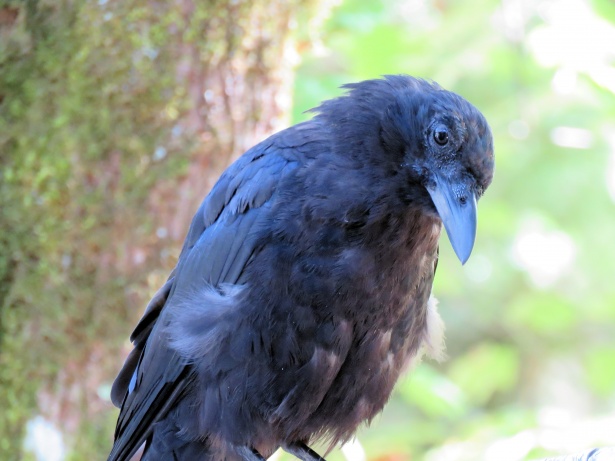
Crow shifters are clever, observant, and deeply emotional in ways they do not always show. They collect things. They collect memories. They collect people. They are protective and loyal and quietly intense.
Mads carries all of that.
He is composed on the outside, but inside he is a storm.
Caden is the one person who can see it.
The Heart of the Story
At its core, Bird’s Eye View is about:
finding someone who understands you before you understand yourself
the tension between authority and vulnerability
the moment instinct overrides logic
the slow burn of two people circling each other until the spark finally catches
It is a romance built on glances, silence, and the kind of chemistry that makes everyone else in the room uncomfortable.
Why This Story Belongs in the Anthology
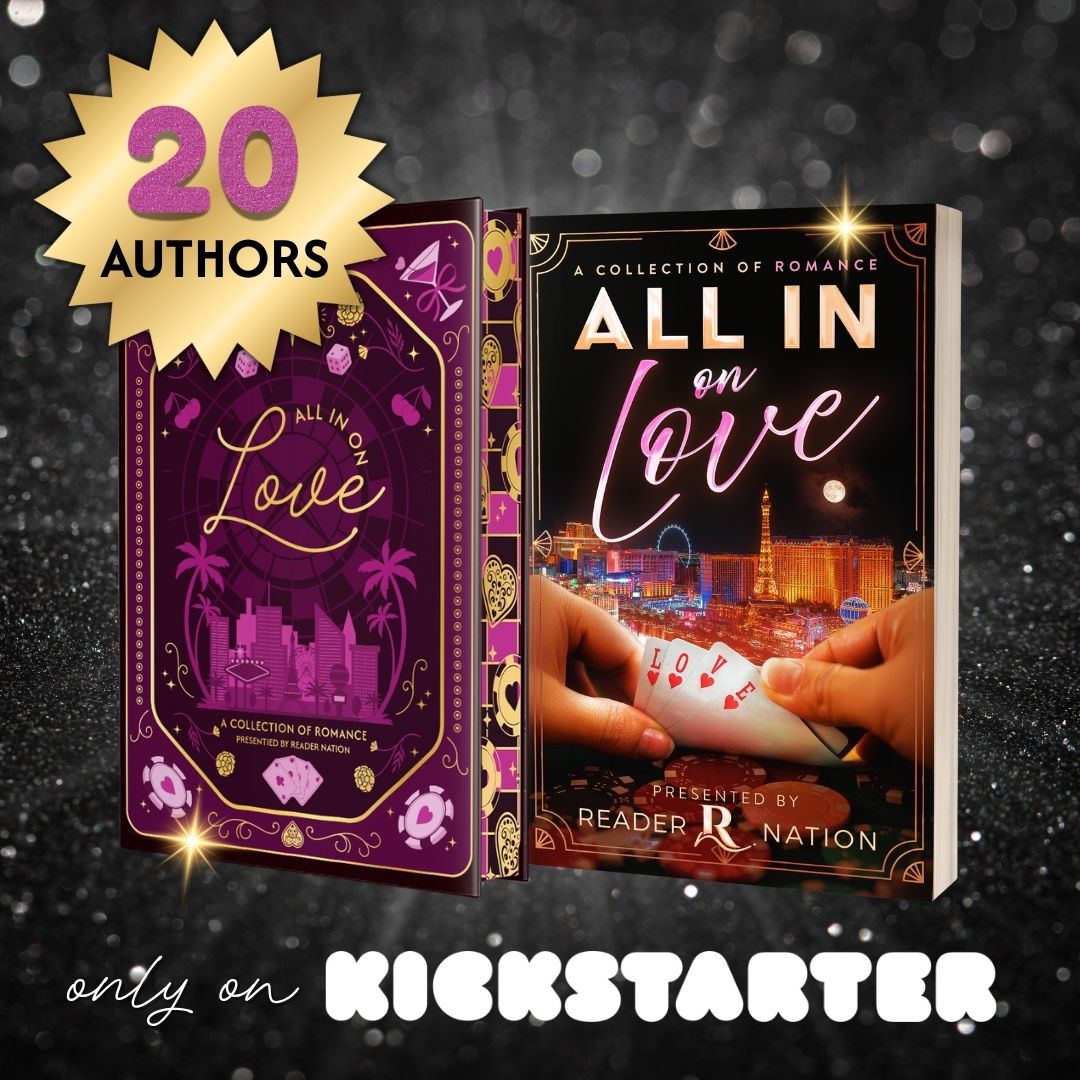
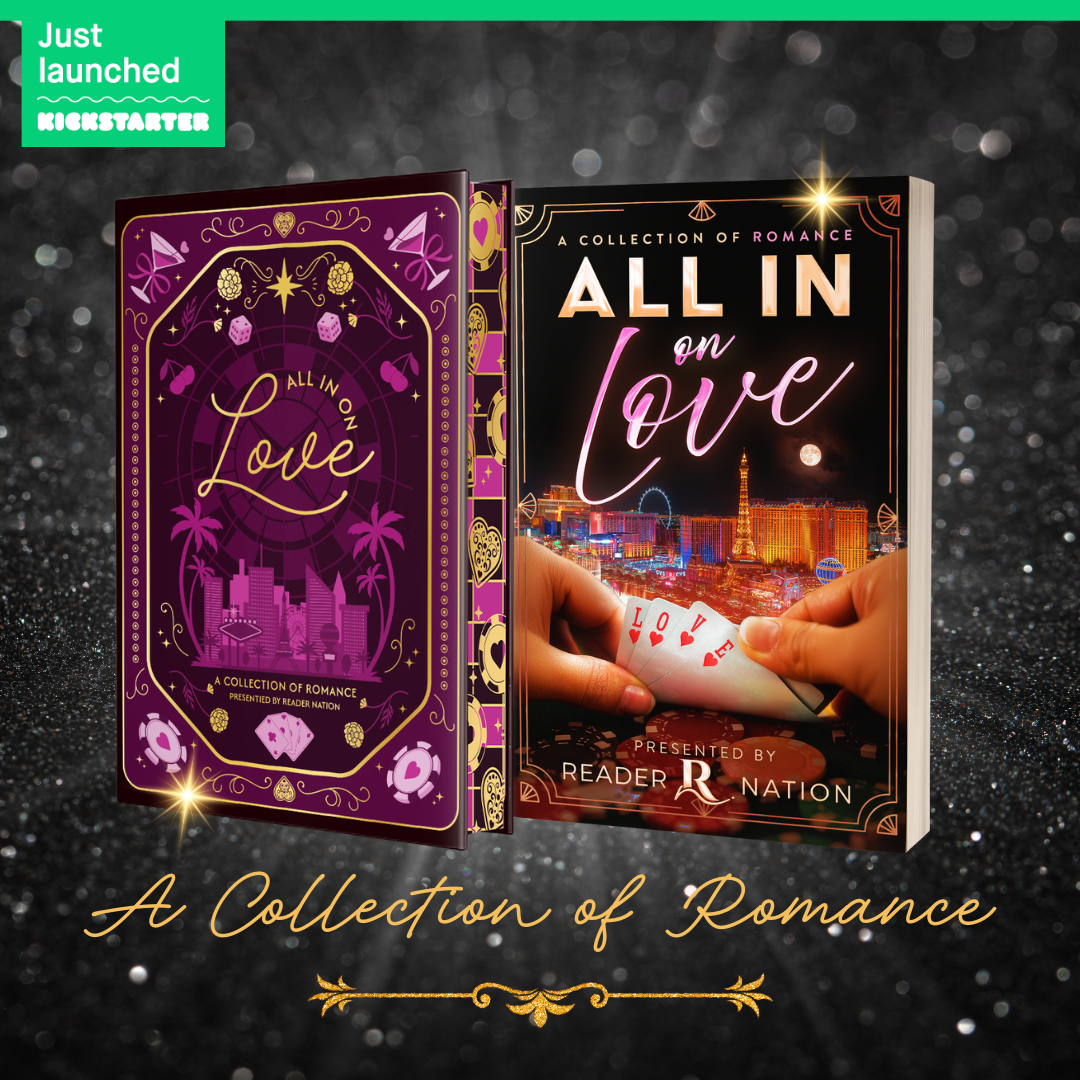
All In on Love celebrates connection. Messy connection. Magical connection. Unexpected connection. Mads and Caden fit perfectly into that theme.
Their story is small in scope and huge in emotion. It is intimate. It is charged. It unfolds in the space between words.
Kickstarter: 5 Days Left
We are building something beautiful with this anthology. It is a collection of stories that celebrate queer love, magic, tension, and the full spectrum of romance.
If you want to read Bird’s Eye View and all the other stories, you can back the project here:
The Kickstarter for All in on Love: A Collection of Romance is fully funded!
I am SO VERY GRATEFUL to you, Wildlings! YOU made this possible. Now we get to work towards some fun stretch goals and extras, but just let me take a moment to tell you from the bottom of my heart: THANK YOU.
The story we contributed to this anthology, “Birds Eye View,” was so much fun to write. Our main character, Mads, is a crow shifter with a secret. We meet Mads in Book 1 of The Foundlings, As the Crow Flies. But in this short story, we get to see that meeting from Mads’ point of view.
It’s challenging to write a character with a secret, because you have to thread the needle between telling enough of the story to bring the reader (that’s YOU, my dear) in on the story, but not so much that you lose the mystery or atmosphere. And with Mads, who lost his parents in a tornado when he was five, “there’s a lot of ‘there’ there,” as my friend Dorothy Werner used to say. But Mads’ crow, now, is a whole different kettle of fish.
His crow is opinionated, irreverent, and not particularly patient with Mads and his interpersonal hang-ups. If it were up to his crow, there’d be no mystery. Just romance.
And when the two meet…
Well, you’ll have to wait for the Kickstarter to find out, now won’t you?
Check it out here and follow along. I’ll be sending out a small Kickstarter‑specific newsletter soon, so you won’t miss a thing.
Throwback to my 05/30/26 post for Delilah Delilah, when this project was still a quiet seedling. It’s been growing in the background ever since, and I’m finally ready to share the next step. The Kickstarter goes live on 7/21, and I can’t wait to show you what’s been unfolding.
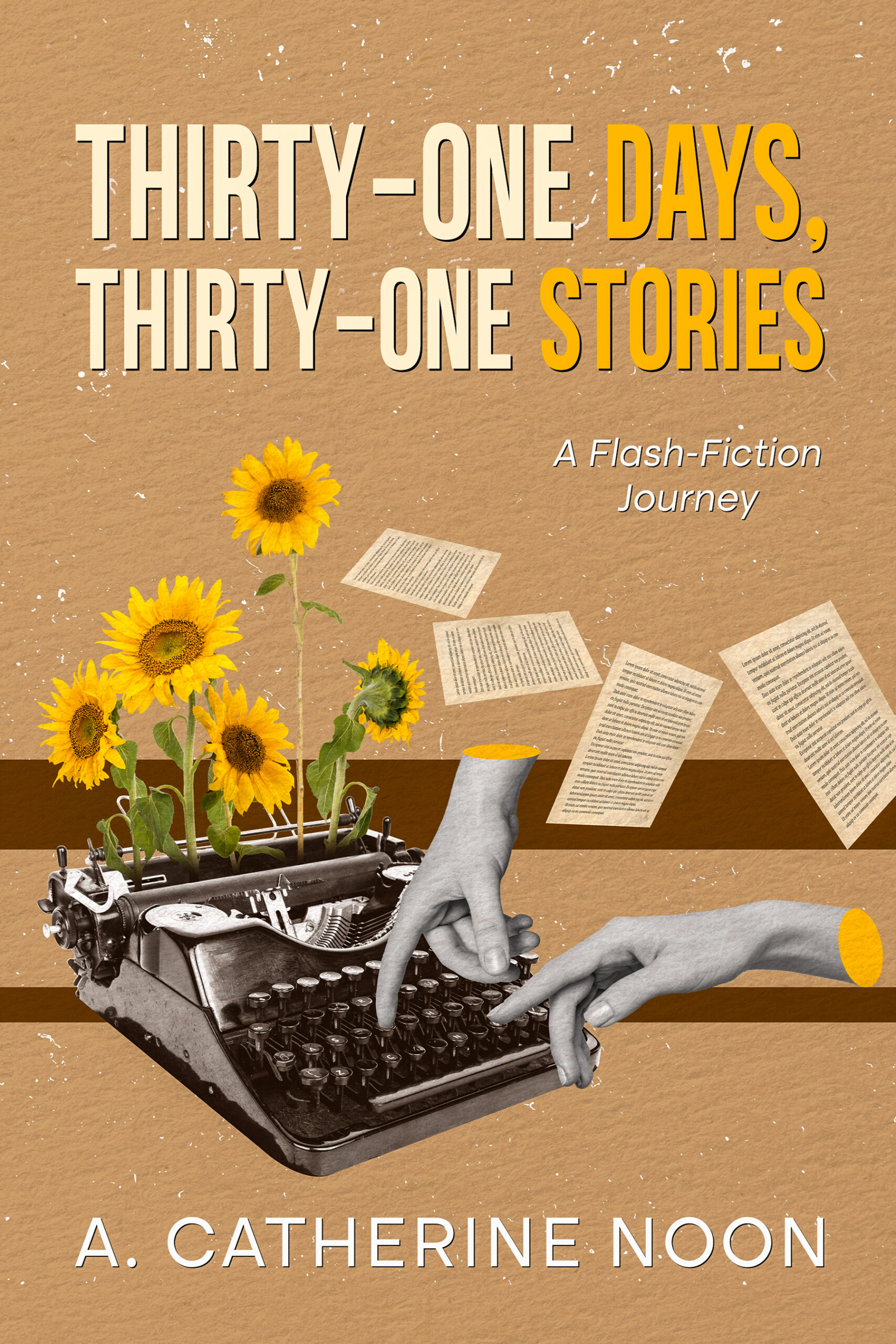
Thirty-One Days, Thirty-One Stories: A Flash Fiction Journey, by A. Catherine Noon
Happy Solstice, Dear Reader! For Summer Solstice this year, I decided to collect 31 stories that I wrote during a challenge one March. It was bonkers and creative and insane and FUN, and I figured you’d enjoy reading it as much as I did writing it.
You can visit our bookshop to check it out. It’s available from your favorite retailers, but I wanted to talk a minute about that. We are working with Curios, and I wanted to share a little bit about why.
First, what is Curios?
Curios is a direct to fan distribution platform for digital content. On Curios, the creator keeps 100% of any revenue earned, they can access their fans contact information, and they maintain the ownership and IP of their work at all times.
We’ve met the founder and chief technology guy, and they are super nice and committed to the artist and author communities. They started originally to help musicians keep more of their income. Did you know, for example, that an artist could post a song on Spotify, get thousands of downloads, and literally make less than a dollar? That’s criminal. So they set out to do something about it. They feel the same way about the indie author space, and that’s why we decided to work with them. Every time you purchase one of our books from them, we keep more of the money you spend and it doesn’t go to some faceless conglomerate or, worse, some billionaire who, frankly, doesn’t need your money.
We also use Mooberry Book Manager, a woman-owned small company that works directly with indie authors to build, you guessed it, bookshops on their websites. When we started with Curios we didn’t see an option to add them as a vendor and the owner of Mooberry worked with me directly, person-to-person, to make that available. What’s more, we were able to connect her with Greg at Curios, expanding the indie author universe. You can check out Mooberry here.
Okay, now to the important part of the announcement, the BOOK! (Right?)
Thirty-One Days, Thirty-One Stories!
It’s LIVE, y’all! I’m stoked.
See, here’s what happened. Clear back in 2008, the Absolute Write forums had a challenge – they’d issue a prompt in the morning, and you had to write a flash fiction story by the end of the day and post it on your blog.
So me? I decided to do it!
Thirty-one days, y’all.
Only one problem. I had no idea how to write flash fiction.
What is flash fiction, you say?
Good question.
Most writers agree that flash fiction is a short story, under say 1,500 words or so, with a beginning, middle, and end.
Being writers, we argue the details. But in general, that’s what it is.
For the challenge, the limit was no more than 1,000 words.
Have you MET me? I can’t tweet to save my life, and I am a friggin’ novelist, y’all.
But they say that the best way to learn is to do, so I do’d. (Rhymes with dude, see what I did there?) And the stories were posted on my blog.
For those of you playing the home game, 2008 is 18 years ago. Y’all, if my stories were a people, they could VOTE.
Wut.
So when people ask me, “What do you write?” and I’m all, “Check out my blog,” they are reasonably going to look at me with deer-in-the-headlights and say, “Um, Noony? WHERE on the blog?”
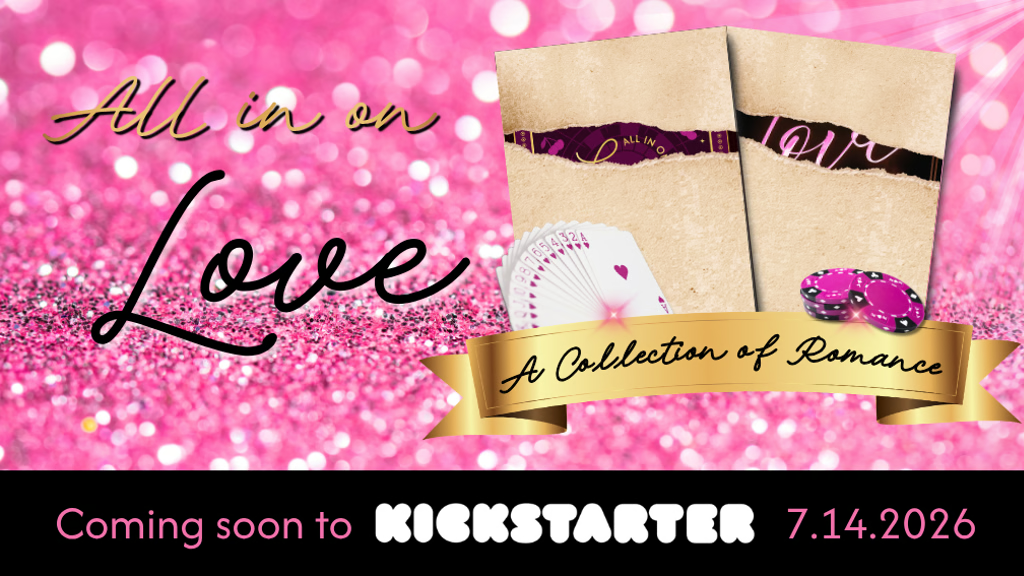
Rachel and I have a short story in the forthcoming anthology, All in on Love! This is a fun one. It’s the meet-cute moment between Caden and Mads, but from Mads‘ point of view!
Why is this fun?
Mads is a contract killer who lost his parents in a tornado when he was five. Trapped in the basement for three days before he was rescued, poor guy has trauma with a capital T.
He is also a crow shifter. And since shifters don’t get their animal form until puberty, his CROW is perfectly well-adjusted – and he has opinions, y’all. Their interactions are a stitch and a half.
Take a peek:
His crow wasn’t even listening. No, he was locked on the guy like he was a magnet.
Pretty! Pretty! Pretty!
He’s a fucking student!
Pretty One is like us.
No point arguing with his crow when he got like this.
See what I mean?
Well, if you want to see more, AND see some amazing stories by fantastic authors including our dear friend Tina Holland, then please visit and click on “Notify me on launch.” You’ll help our algorithm and you’ll get to read some amazing stories. Win-win!
That’s all for now, my little Wildlings. Remember: eat your vegetables, move your body, and for the love of Pete, READ SOMETHING FANATASTIC!
In the Foundlings’ world, not all magic is loud. Some of it moves like breath — a soft stirring of air that slips through open windows, rustles the edges of maps, and lifts the hair at the nape of the neck. The elders call it zephyr, though the word barely captures the way it feels.
Zephyr is the magic of subtle shifts. The magic that arrives before you realize anything has changed.
The Wind That Knows
Zephyr is not a wind in the ordinary sense. It doesn’t follow weather patterns or seasons. It follows intention.
It moves toward:
a question forming in the mind
a choice not yet spoken
a path that’s about to open
a truth someone is finally ready to hear
Zephyr is the messenger magic — the one that carries hints, warnings, and invitations.
Where It Moves
You can feel zephyr in certain places:
at the edge of the Night Market, where lanterns sway without any breeze
in the high branches where the owls keep watch
along the old roads that remember every footstep
in the quiet between two people who haven’t yet said what matters
It’s the kind of magic that doesn’t push. It nudges.
Those Who Notice
Some Foundlings are more attuned to zephyr than others.
Aaron feels it first — a shift in the air, a prickle of awareness. Mads senses it in the way shadows lengthen, as if the world is holding its breath. Even Breck, who pretends not to believe in such subtleties, has been known to pause mid‑stride when the wind changes direction.
Zephyr doesn’t choose favorites. It simply goes where it’s needed.
The Meaning It Carries
Zephyr is the magic of:
beginnings disguised as endings
endings disguised as beginnings
the moment before a decision
the breath before a name is spoken
the hush before something important arrives
It’s the reminder that magic doesn’t always roar. Sometimes it whispers.
Together
Zephyr is the final letter of this cycle, but not the end of anything. It’s the soft shift that signals the next chapter, the next question, the next quiet unfolding.
It’s the magic that says: Pay attention. Something is moving.
A Question for You
Where in your life do you feel a subtle shift in the air — the kind that suggests something is about to change.
In the Foundlings’ world, magic doesn’t always arrive with light or sound. Sometimes it comes as a pull — a quiet ache beneath the sternum, a tug toward something not yet seen but already known. The elders call it yearning, though the word feels too small for what it truly is.
Yearning is the magic that moves before the feet do. It’s the compass that points toward the thing you didn’t know you were missing.
The Pull Beneath the Ribs
Yearning begins as a sensation: a flutter, a tightening, a warmth that gathers just behind the heart. It’s not painful, but it’s insistent — a reminder that something in the world is calling your name.
Some Foundlings feel it when they’re young. Others don’t feel it until much later, when the world has already carved its marks into them.
But when it comes, it’s unmistakable.
The Things That Call
Yearning can be stirred by many things:
a lantern glowing in a window at dusk
the cry of a hawk circling above the treeline
the scent of rain on stone
a name spoken softly in the dark
a path that forks in the woods and feels strangely familiar
Sometimes the thing that calls is a person. Sometimes it’s a place. Sometimes it’s a truth you’re not ready to hold — not yet.
Those Who Feel It Deeply
Some Foundlings carry yearning like a second heartbeat.
Aaron feels it when he stands at the edge of the Night Market, watching the lanterns sway. Mads feels it in the quiet hours, when the world is still and the wind shifts direction. Even Breck, who pretends he’s immune to such things, has been known to stare too long at the horizon.
Yearning doesn’t ask permission. It simply arrives.
The Path It Opens
Yearning is not a command. It’s an invitation.
It doesn’t say, Go. It says, Listen.
And when you do, the world rearranges itself — subtly, gently — until the next step becomes clear.
Yearning is the magic that leads you toward the life that’s waiting for you, even if you don’t yet know its shape.
Together
Yearning is the thread that pulls the Foundlings forward:
toward each other
toward their magic
toward the truths they’re meant to uncover
It’s the soft ache of becoming. The quiet promise of what could be. The whisper that says, There is more for you than this.
A Question for You
Where in your life do you feel that quiet pull — the one that asks you to listen more closely.
There’s a particular kind of magic in the Foundlings’ world that doesn’t announce itself with sparks or storms. It’s quieter than that, older than that — a magic that lives in the spaces between people. The kind that arrives when a door opens, when a stranger is welcomed, when a hearth makes room for one more chair.
The Foundlings call it xenial magic: the enchantment of hospitality, of shared shelter, of choosing to make space for someone who wasn’t yours until the moment you said yes.
The Threshold
Xenial magic gathers at thresholds — doorways, gates, the edges of tents in the Night Market. It hums in the air when someone steps inside from the cold. It’s the warmth that rises from the floorboards when a guest crosses into a home that wasn’t expecting them but welcomes them anyway.
Some say the magic is strongest in places where many feet have crossed the same threshold. Others say it’s strongest when the person entering has nowhere else to go.
Both are true.
The Gesture
Xenial magic isn’t grand. It’s made of gestures:
a cup of tea placed in unfamiliar hands
a blanket offered without being asked
a lantern lit in the window for someone still on the road
a name spoken gently, as if it matters (because it does)
These small acts shift the air. They say, You are safe here. And in the Foundlings’ world, safety is its own kind of spell.
The People Who Carry It
Some people carry xenial magic without trying.
Aaron does — the way he always notices who’s cold, who’s hungry, who’s pretending not to be tired. Mads does — though he’d deny it, his quiet presence is its own invitation. Even Breck, with all his sharp edges, has a way of making space for those he calls his own.
But xenial magic isn’t limited to the familiar. It blooms brightest when extended to someone unexpected.
The Exchange
Xenial magic is reciprocal, though not always in the moment. A kindness offered becomes a thread in the weave of the world. A door opened becomes a door that will open again. A meal shared becomes a memory that warms more than one life.
In the Foundlings’ world, magic isn’t just power. It’s relationship.
Together
Xenial magic is the enchantment of welcome — the spell that turns strangers into guests, guests into companions, companions into kin.
It’s the reminder that magic doesn’t always arrive with spectacle. Sometimes it arrives with a warm bowl, a soft blanket, a place to sit.
Sometimes the most powerful magic is simply this: Come in. You’re safe here.
Where in your life have you felt the quiet magic of being welcomed when you least expected it?
There’s a moment in every Foundling’s life when their magic stops being something they manage and starts being something they inhabit. It’s subtle at first — a shift in posture, a widening of breath, a sense that the world has more room in it than it did the day before.
That moment is Wingspan.
Wingspan isn’t about literal wings (though some Foundlings have those too). It’s about the internal expansion that happens when someone who has spent years folding themselves small finally realizes they don’t have to anymore.
The Architecture of Becoming
Foundlings grow sideways before they grow upward. Their magic stretches into the corners of their lives long before it rises into something visible. Wingspan is the point where all those quiet expansions finally connect.
It’s the moment when:
a character stops apologizing for their power
a truth they’ve been avoiding becomes undeniable
a bond deepens into something chosen
a boundary becomes a line of protection instead of fear
Wingspan is not a single event. It’s a threshold.
The Body Remembers
In the Foundlings world, magic is inseparable from the body. When a character’s wingspan grows, their body knows it first — shoulders loosening, breath deepening, gaze lifting. Even characters without physical wings feel the shift.
It’s the sensation of:
“I can take up more space than I thought.”
“I don’t have to fold myself to fit.”
“I am allowed to exist at my full size.”
Wingspan is the opposite of hiding.
Claiming Space
Every Foundling has a different relationship to space. Some were never given any. Some were punished for taking too much. Some learned to survive by shrinking.
So when their wingspan arrives, it’s not just magical — it’s emotional.
It’s the moment they stop surviving and start becoming.
Wingspan is the quiet declaration: “I am here. I am whole. I am not going back.”
The World Responds
In the Foundlings universe, magic is relational. When someone’s wingspan expands, the world shifts around them — allies notice, enemies react, and the land itself sometimes stirs.
Wingspan is a turning point not just for the character, but for the story.
It’s the beginning of the next arc.
A Question for You
Where in your own life have you felt your “wingspan” growing — even a little?
Veils are the thin places between what is seen and what is sensed — the soft, shifting layers that separate one truth from another. They’re not barriers so much as invitations. A veil doesn’t say no; it says not yet. It asks you to look again, to look differently, to look with more than your eyes.
Some veils are protective. Some are deceptive. Some are simply the natural shimmer between worlds.
A veil can be a feeling you can’t name, a memory you can almost touch, a moment that feels doubled — as if something else is happening just beneath the surface. Veils remind us that reality is not a single, solid thing. It’s layered. Textured. Alive.
And sometimes the veil is inside you — the part of yourself you’re not ready to reveal, even to your own reflection. The part that needs shadow before it can bear light. The part that knows timing is its own kind of magic.
Veils don’t hide the truth. They prepare you for it.
What veil are you sensing right now — and what might be waiting on the other side?
Underwings are the hidden places where magic shelters before it’s ready to be seen. The soft, shadowed spaces beneath what looks ordinary — a gesture, a word, a moment — where something truer waits with patient breath. Underwings are the parts of us that stay tucked away until the world feels safe enough to meet them.
Some underwings are protective. Some are transformative. Some are simply waiting for the right light.
You can feel an underwing when something inside you stirs but doesn’t rise.
When you sense a shift but can’t name it yet. When you know you’re changing, but the change hasn’t stepped fully into the open. Underwings are the magic of becoming — not the moment of emergence, but the quiet gathering before it.
They’re the places where we hold our tenderness, our power, our not‑yet‑selves. They’re the soft architecture of growth, the hidden scaffolding that keeps us from collapsing while we learn how to unfurl.
What underwing is stirring in you — and what might it become when it finally opens?